Dirk doesn't do shortcuts. I watched him spend three hours shaping a single oak rib for a 12-meter sloop, rejecting two blanks because the grain ran just slightly against the load line. "Wood remembers," he said, running a thumb along the edge. "Bend it wrong once, and she'll fight you for thirty years." That kind of stubbornness explains why boatyards along the Dutch coast still pass his name around like a password. Dirk learned the trade from his grandfather, who built fishing boats in Friesland before fiberglass made everything faster and。in Dirk's view, forgettable.His workshop smells of linseed oil and cedar shavings. No CNC router in sight—just a 1962 bandsaw, a wall of hand planes, and a kettle that never quite cools. Dirk works alone, mostly. He tried apprentices twice. The first quit after a month of sharpening chisels. The second lasted longer but kept asking when they'd "get to the fun part." Dirk's answer: "There is no fun part. There's only the part where the joint fits." He charges by the hour, not the project。which terrifies clients used to fixed quotes. The ones who stay, stay for decades.Last spring, a collector from Hamburg brought him a 1938 mahogany runabout with a cracked stem and a bad reputation. Three other restorers had quoted six figures and promised a full rebuild. Dirk looked for twenty minutes, pointed at the scarf joint near the waterline, and said, "She doesn't need a rebuild. She needs respect." He replaced eleven inches of stem, matched the patina with a tea-and-iron-filing wash。and charged less than the cheapest competitor. The owner cried when he saw it. Dirk pretended not to notice and went back to sweeping.There's a lesson in Dirk's ledger, though he'd never frame it that way. Craft isn't nostalgia. It's a set of decisions made under constraint—grain direction, moisture content。
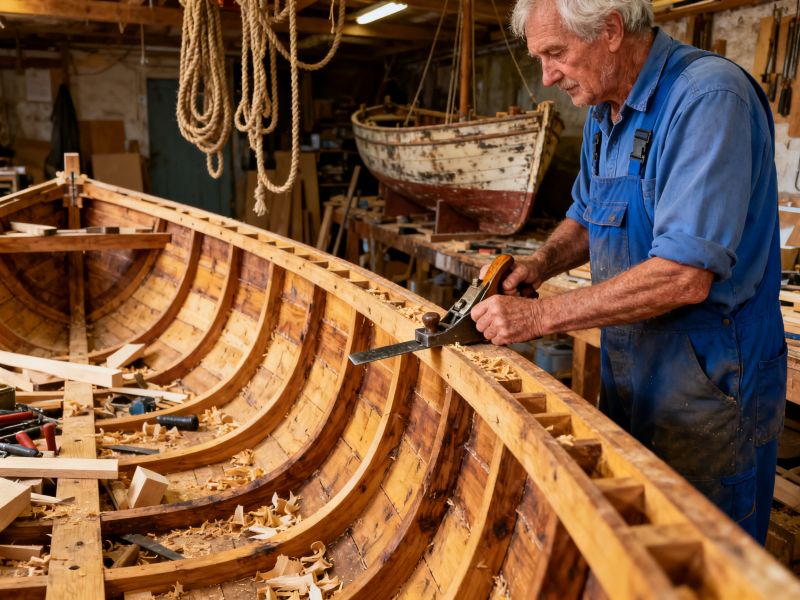
the way a fastener seats. Dirk keeps a notebook of failures: joints that opened, finishes that blistered, a rudder that hummed at speed. He reads it before every new commission. Most trades bury their mistakes. Dirk files them where he can see them.He's sixty-three now, and his knees complain on cold mornings. A local museum asked to archive his tools. He said no, then offered to teach a Saturday class instead—four people, hand tools only, no power sanders. Two showed up. Dirk didn't seem bothered. "Four was optimistic。
" he said, handing out whetstones. "The work outlives the worker. That's the whole point."